

Anatolia Pool & SPA

Blog Posts

Anatolia Pool & Spa
What Is Legionnaires' Disease?

Legionnaires' disease is a severe lung infection caused by the bacterium Legionella pneumophila. It does not spread from person to person; instead, it is transmitted by inhaling contaminated water droplets and aerosols. Common sources include showerheads, hot and cold water systems, cooling towers, spas, whirlpools, and jacuzzis.

Legionnaires' Disease Risk in Turkey

Due to high tourism activity, large water installations, and extensive international travel, Legionnaires' disease is considered a significant public health concern in Turkey. Since 1996, the disease has been monitored within the “Legionnaires' Disease Control Program,” which mandates various preventive measures for high-risk facilities.

Risk Factors

People at increased risk of developing Legionnaires' disease include:

  • Being over 50 years old
  • Male gender
  • Smoking
  • Chronic lung disease
  • Weakened immune system
  • Alcohol dependence
  • Underlying medical conditions such as diabetes, cancer, organ transplantation
  • Exposure to old or poorly maintained water systems

Environments Where Legionella Thrives

  • Hot water tanks and hot water distribution systems
  • Cold water systems above 20°C (68°F)
  • Cooling towers and evaporative cooling units
  • SPA pools, thermal baths, whirlpools
  • Decorative fountains and artificial ponds
  • Respiratory therapy devices in hospitals
  • Dental unit waterlines
  • Eye wash stations and fire sprinkler systems

Modes of Transmission

Legionella spreads primarily through two mechanisms:

1. Inhalation of Aerosols

  • Fine droplets released from showerheads
  • Aerosols dispersed from cooling towers
  • Steam generated by spas, whirlpools, and jacuzzis
  • Humidifiers and misting devices

2. Aspiration

Accidental inhalation or aspiration of contaminated water into the lungs can also lead to infection.

Common Locations Where Legionella Is Present

  • Hotels
  • Hospitals
  • Shopping malls and restaurants
  • Sports and fitness centers
  • Campsites
  • Factories and industrial facilities
  • SPA and thermal centers
  • Ships and ventilation systems

Preventive Measures for Facilities

  • Assign trained personnel responsible for Legionella risk management
  • Clean hot water tanks every 3 months and cold water tanks every 6 months
  • Maintain hot water tank temperatures at a minimum of 60°C (140°F)
  • Ensure that tap water reaches 50–60°C (122–140°F) within 1 minute
  • Eliminate unused pipe sections and dead legs
  • Flush taps and showers in unoccupied rooms for at least 3–5 minutes daily
  • Regularly descale and disinfect showerheads
  • Perform mechanical cleaning of cooling towers at least twice a year
  • Disinfect heating and plumbing systems annually

Procedures Before Reopening a Facility

  • Increase hot water system temperature to 70°C (158°F) and maintain it for 24 hours
  • Flush all taps and showers for 5–10 minutes before use
  • Apply system-wide hyperchlorination (minimum 3 ppm)
  • Remove, clean, and disinfect showerheads
  • Fully drain and disinfect cooling towers

Water Sampling and Monitoring

To effectively control Legionella risk, facilities must conduct monthly water sampling and ensure continuous implementation of appropriate biocide applications.

Conclusion

Legionnaires' disease represents a serious health risk in large facilities such as hotels, hospitals, and SPA centers. Regular system maintenance, temperature monitoring, proper disinfection, and routine water analysis are essential for safeguarding public health and complying with regulatory requirements.

Anatolia Pool & Spa
Swimming Pool Operation Instructions

To maintain a clean, safe and efficient swimming pool system, filtration, backwashing, rinsing and vacuuming procedures must be performed correctly. These operation guidelines ensure consistent water quality, protect public health and extend the lifespan of pool equipment.

Filtration (FILTER)

Filtration is the standard operating mode of the pool. The balance tank valve is fully opened, the main drain valve is opened between 20–50%, and the vacuum valve remains closed. The multiport valve is set to “FILTER” and the pump is started. The pressure gauge should read between 0.5 and 1 bar.

If the pressure rises by approximately 50% from the initial value, the filter is considered dirty and requires backwashing followed by rinsing.

Backwash (BACKWASH)

Over time, dirt and debris clog the pores between the filter sand grains, causing the internal pressure of the filter to rise. When the gauge reaches the yellow or red zone, backwashing is required. The multiport valve is set to “BACKWASH,” the pump is started and dirty water is discharged directly to waste.

During this operation, suction can be taken from the main drain or the balance tank.

Rinse (RINSE)

After backwashing, rinsing is necessary to prevent debris on the filter surface from returning into the pool. The valve is switched to “RINSE,” the pump is started and the operation continues until clean water appears through the sight glass.

Waste (WASTE)

When a large amount of sediment is present on the pool floor or when water must be discharged without contaminating the filter, the “WASTE” mode is used. In this mode, water bypasses the filter and flows directly to the drainage system. Pools without a natural drainage valve can also be emptied entirely using this method.

Recirculate (RECIRCULATE)

In this mode, pool water bypasses the filter and is returned directly to the pool. It is used when rapid water circulation is required without filtration.

Closed (CLOSED)

The “CLOSED” setting is used when maintenance is required on the pipeline between the pump and the filter or when the pool is taken out of service for the winter season.

Important: The pump must never be running while changing the multiport valve position.

Overflow Pool Operating Instructions

Overflow pools operate using balance tanks and channel systems to maintain proper circulation.

  • Never open or close any valves while the pump is running.
  • Never turn on underwater lights when the pool is empty.
  • Never mix chlorine and acid in the same container.

A - Filtration Procedure

This is the daily operating mode of the pool and ensures continuous water cleanliness.

  1. Stop the pump.
  2. Set the multiport valve to “FILTER.”
  3. Half open the main drain valve.
  4. Fully open the balance tank valve.
  5. Ensure the vacuum valve is closed.
  6. Fully open the return (discharge) valve.
  7. Close the waste valve.
  8. Start the pump and check the pressure gauge.

B - Vacuuming Procedure

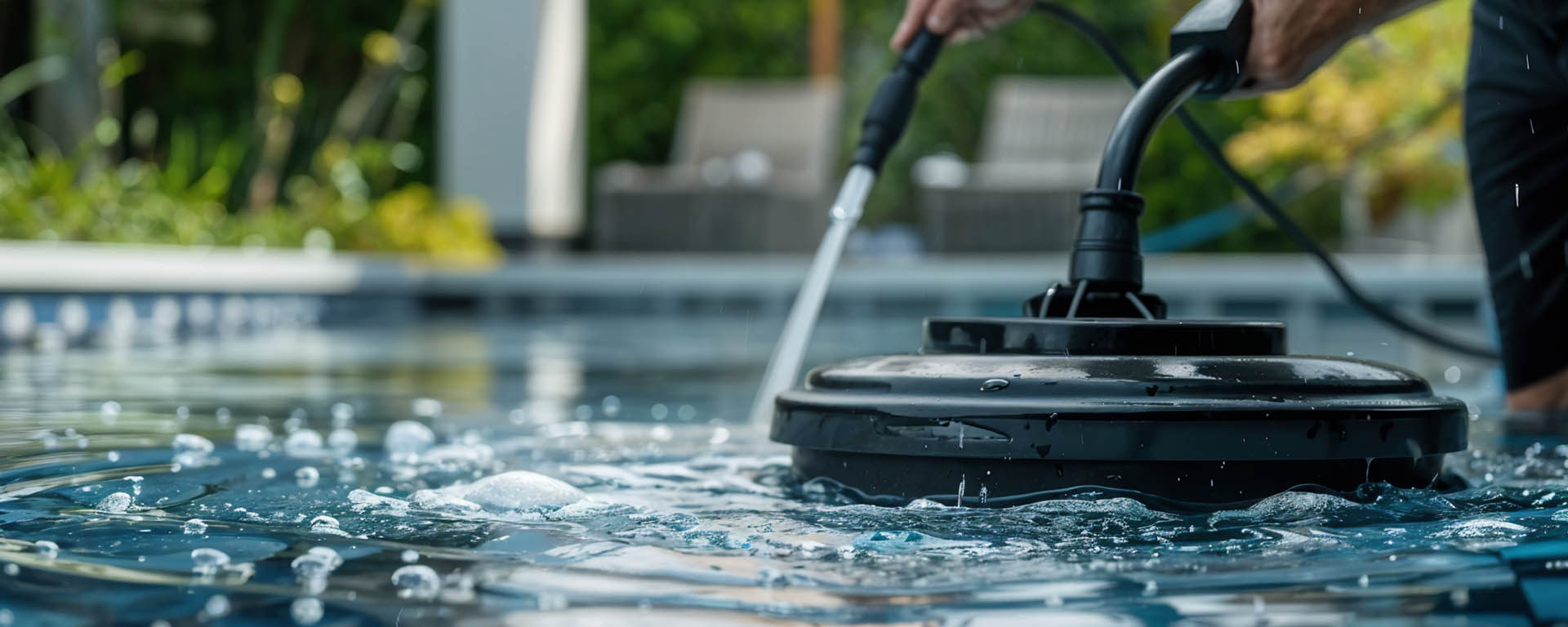
This procedure is used to clean dirt and debris accumulated on the pool floor.

  1. Stop the pump.
  2. Set the valve to “FILTER.”
  3. Close the main drain valve.
  4. Half open the balance tank valve.
  5. Fully open the vacuum valve.
  6. Fully open the return valve.
  7. Open the waste valve.
  8. Open the vacuum lid in the pool and connect the vacuum hose.
  9. Start the pump and perform the vacuuming operation.

After vacuuming, clean the pump’s pre-filter basket thoroughly and reassemble it.

Backwash and rinse must be performed afterwards.

C - Backwash Operation

Backwashing is performed when the filter becomes dirty. It must also be carried out after every vacuuming task.

  1. Stop the pump.
  2. Set the multiport valve to “BACKWASH.”
  3. Close the main drain valve.
  4. Fully open the balance tank valve.
  5. Ensure the vacuum valve is closed.
  6. Close the return valve.
  7. Open the waste valve.
  8. Start the pump and continue until the sight glass shows clear water.

D - Rinse Operation

Rinsing must always be done after backwashing to reset the filter bed and prevent dirty water from returning to the pool.

  1. Stop the pump.
  2. Set the valve to “RINSE.”
  3. Close the main drain valve.
  4. Fully open the balance tank valve.
  5. Ensure the vacuum valve is closed.
  6. Close the return valve.
  7. Open the waste valve.
  8. Start the pump and continue until the water runs clear.

After rinsing, return the system to filtration mode.

Skimmer Pool Operating Instructions

  • Do not operate valves while the pump is running.
  • Do not turn on pool lights when the pool is empty.
  • Never mix chlorine and acid together.
Anatolia Pool & Spa
Swimming Pool Problems and Solutions: Complete Guide to the Most Common Pool Issues

Swimming pools require balanced water chemistry, proper filtration and consistent maintenance. When these processes are disrupted, several swimming pool problems can occur, affecting water clarity, hygiene and equipment performance. This comprehensive guide explains the most common pool issues and provides professional, practical solutions for both residential and commercial pool operators.

1. Cloudy Pool Water

Cloudy water is one of the most common swimming pool problems. It indicates poor water quality and usually results from filtration issues or chemical imbalance.

Common Causes of Cloudy Water

  • Dirty or clogged filter
  • Low chlorine levels
  • Unbalanced pH and alkalinity
  • Insufficient circulation time
  • Contaminants from swimmers such as oils and cosmetics

Solutions for Cloudy Water

  • Perform a backwash to clean the filter
  • Apply chlorine shock treatment
  • Adjust pH to the ideal range of 7.2–7.6
  • Increase daily pump running time
  • Use a flocculant if necessary

2. Algae Growth

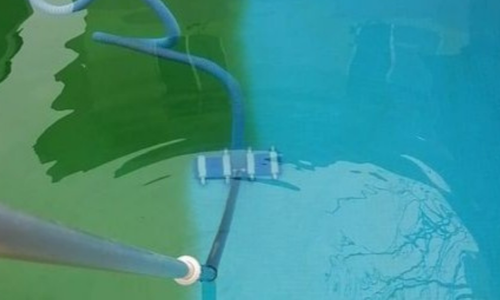
Green, yellow or black spots on pool walls are clear signs of algae growth. Algae not only makes the pool unattractive but can also create safety and hygiene risks.

Causes of Algae Growth

  • Low chlorine levels
  • Poor water circulation
  • Insufficient brushing of pool surfaces
  • Warm and sunny weather conditions

Solutions for Algae Problems

  • Apply a strong chlorine shock treatment
  • Brush pool walls and floor thoroughly
  • Use a quality algaecide
  • Increase filtration time

3. Unpleasant Pool Odors

Strong or unpleasant odors indicate poor water quality. Contrary to popular belief, this smell is not caused by too much chlorine but by chloramines created when chlorine reacts with organic waste.

Causes of Pool Odors

  • High chloramine levels
  • Low free chlorine
  • Improper pH balance
  • Accumulation of oils, sweat and cosmetics

Solutions for Pool Odor

  • Perform chlorine shock to eliminate chloramines
  • Adjust pH to the recommended range
  • Improve filtration and circulation
  • Encourage showering before entering the pool

4. pH and Chemical Imbalance

Incorrect water chemistry is one of the leading causes of swimming pool problems. High or low pH levels can damage equipment, irritate skin and eyes and reduce chlorine effectiveness.

Causes of Chemical Imbalance

  • Incorrect chemical dosing
  • Heavy pool usage
  • Rainwater contamination
  • Inaccurate water testing

Solutions to Restore Chemical Balance

  • Adjust pH to 7.2–7.6
  • Correct alkalinity levels
  • Test water daily or weekly
  • Use reliable chemical balancing products

5. Filtration System Problems

The filtration system is the heart of your pool. When it malfunctions, water can quickly become dirty, cloudy or unsafe.

Common Filtration Issues

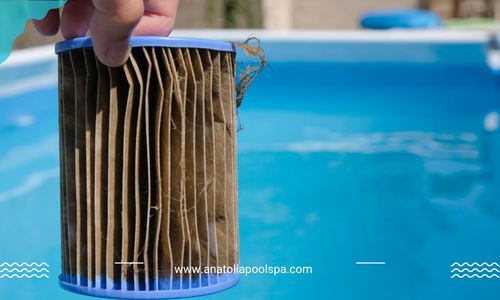
  • Dirty or saturated sand filter
  • Undersized or weak pump
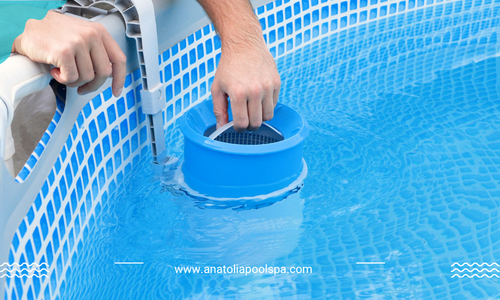
  • Clogged pump basket
  • Faulty multiport valve

Solutions for Filtration Problems

  • Perform regular backwash
  • Replace filter sand every 2–3 years
  • Clean pump baskets frequently
  • Inspect valves and pipes for leaks or blockages

6. Low or High Chlorine Levels

Chlorine levels directly affect water hygiene. The ideal range for free chlorine is 1–3 ppm.

Chlorine Problem Solutions

  • Use shock chlorine if levels are too low
  • If levels are too high, keep the pool closed temporarily
  • Adjust pH to ensure chlorine efficiency
  • Use stabilizer (CYA) in outdoor pools

Conclusion: Swimming Pool Problems Can Be Prevented with Proper Maintenance

Most swimming pool problems can be completely avoided with regular maintenance, balanced water chemistry and efficient filtration. Whether you manage a commercial pool or a private backyard pool, following the solutions in this guide will help maintain clean, safe and crystal-clear water all season long.

Anatolia Pool & Spa
Pool Heating Guide for Antalya : Heat Pump vs Solar vs Heat Exchanger

Antalya’s long summer is a gift—but in shoulder seasons, the right pool heating makes all the difference. This guide compares heat pump, solar collectors and heat exchanger solutions across investment, operating cost and maintenance. Goal: reach target temperature quickly, efficiently and safely—matched to your budget and usage profile.

Set Your Goals First

  • Usage profile: Villa, residential site or hotel/aquapark?
  • Water temperature: 26–28 °C (typical), 30–34 °C (spa/children)
  • Season: April–June & Sept–Nov support, or year-round?
  • Energy access: Electrical capacity, central boiler line, roof area
  • Noise & placement: Neighbor sensitivity, indoor/outdoor plant room

Pool Heating Options — Quick Comparison

System Typical Advantage Watch Out For Best Fit
Heat pump (air-to-water) High COP, fast install, precise control Electrical capacity, outdoor unit noise/placement Villas, sites, hotels (shoulder seasons)
Solar collectors Lowest operating cost, sustainable Roof area, weather dependence Villas/sites with large roofs
Heat exchanger (with boiler) Rapid transfer, integrates with existing line Boiler capacity, hydraulic balance, fuel cost Hotels/sites with central boilers

Heat Pump: Efficiency, Sizing & Noise

In Antalya’s climate, a heat pump delivers strong COP in shoulder seasons. Inverter models offer better part-load efficiency and lower noise. Size by pool volume, target temperature and local wind/grid conditions. With the right heat exchanger, bypass and automation, operation stays stable.

  • Pros: High efficiency, precise control, quick commissioning
  • Cons: Outdoor unit location & noise, electrical capacity
  • Ideal: Villas/sites, season extension

Solar: Low Opex, Right Area

Thanks to long sunshine hours, solar collectors cut operating costs through the season. Success depends on adequate collector area, hydraulic balancing and protective automation against freeze/overflow. A hybrid with a heat pump is a strong strategy in shoulder months.

  • Pros: Lowest operating cost, sustainability
  • Cons: Roof/terrace space, weather dependence
  • Ideal: Large-roof villas/sites, hybrid systems

Heat Exchanger: Central Integration

With an existing boiler or central line, a plate heat exchanger transfers heat safely to the pool loop. Key points: hydraulic balance, sufficient boiler capacity and materials compatible with pool chemistry. In hotels, prioritise between DHW and pool via automation.

  • Pros: Fast heating, reuse existing infrastructure
  • Cons: Fuel-cost exposure, boiler loading
  • Ideal: Hotels/sites with central boilers

Sizing Quick Guide

Pool Volume Heat Pump (approx.) Solar Area (approx.) Heat Exchanger (approx.)
30–40 m³ 9–12 kW 12–18 m² 20–30 kW
40–60 m³ 12–16 kW 18–28 m² 30–45 kW
60–90 m³ 16–24 kW 28–40 m² 45–70 kW

Values are indicative for shoulder-season targets and local conditions; for accurate selection, request a site visit and professional sizing.

Automation, Cover & Hydraulics: Hidden Savings

  • Automation: Smart timers, thermoregulation, ORP/pH integration
  • Heat-loss control: Night cover, wind protection
  • Hydraulics: Proper circulation, filtration and bypass tuning
  • Maintenance: Condenser cleaning, refrigerant/flow sensors, calibration

The right automation & control stack cuts annual energy costs and keeps water chemistry stable.

Quick Scenarios: Which Pool Heating Fits You?

  • Villa (40–60 m³): Inverter heat pump + night cover → flexible & quiet
  • Residential site: Heat pump cluster + automation → scalable
  • Hotel: Central line heat exchanger + peak-hour heat pump assist → continuity
  • Large roof area: Solar + heat pump hybrid → lowest opex

FAQ

Will a heat pump work in winter?

Yes, but efficiency depends on ambient temperature. In Antalya it’s ideal for shoulder seasons; use a hybrid for winter.

Is solar alone enough?

Great in summer; in shoulder months a hybrid delivers more predictable results.

Does a heat exchanger need chemistry-safe materials?

Absolutely—choose compatible materials and proper hydraulic separation to avoid corrosion/leaks.
Anatolia Pool & Spa
Reducing Hotel Pool Chemical Costs by Up to 20%

Peak-season bather load and compliance demands can push hotel pool chemical costs upward fast. The good news: with the right automation, scheduled water analysis and standardized dosing, most properties can cut consumption by 10–20%. This guide offers practical steps to improve water quality while protecting your budget.

Why Do Hotel Pools Overuse Chemicals?

  • Unstable pH and incorrect ORP setpoints
  • Weak circulation/filtration efficiency and short-circuit flows
  • Wrong CYA (stabiliser) level and high TDS
  • Inconsistent sampling and insufficient training
  • Out-of-calibration probes and inaccurate dosing

Quick Wins — Impact in the First 30 Days

Action Expected Impact Note
ORP/pH automation setpoint review 5–10% chemical savings Track daily trends
Probe calibration (weekly) Accurate readings, stable dosing Two-point buffer
Filtration optimisation (backwash/media) Less turbidity, lower consumption Monitor ΔP
Balance via LSI Reduced corrosion/scaling risk Align pH/TA/CH

Smarter Dosing with ORP/pH Automation

At hotel scale, the biggest gains usually come from automatic dosing. Correct ORP and pH setpoints, calibrated probes and reliable hydraulic injection points keep water chemistry within tight tolerances—lowering chemical costs and complaint rates.

  • Recommended setpoints: pH 7.2–7.4, ORP 650–750 mV (by pool type)
  • Doser selection: peristaltic or diaphragm based on range
  • Data logging: daily trend charts and alarm thresholds

For integration and equipment see: Chemical Supply & DosingAutomation & Control

Routine Water Analysis & Sampling Standards

A weekly full panel plus daily pH/chlorine/ORP checks—evaluated together with LSI—prevents over-dosing. Without proper sampling technique, no reading is trustworthy.

  • Sampling: mid-depth while circulation is on
  • Panel: pH, free/combined chlorine, alkalinity, calcium hardness, CYA, TDS
  • Report: trend chart + action plan

External support: Water Analysis & Testing

Example Savings Scenario — 300 m³ Hotel Pool

Item Current After Optimisation
Free chlorine target Fixed 3.0 ppm 1.5–2.0 ppm (ORP-controlled)
pH control Manual Automatic dosing, 7.2–7.4
Monthly chlorine use* 100 units 80–88 units

*Illustrative; actual numbers vary by bather load and pool type.

Weekly Checklist

Task Status
Probe calibration (pH/ORP)
Backwash and ΔP record
LSI calculation (pH/TA/CH)
Trend report and alarm log

FAQ

Is ORP alone enough?

No. ORP must be evaluated together with free chlorine and pH.

Why does CYA matter?

High CYA lowers chlorine effectiveness; for outdoor pools, 0–50 ppm is preferred.

Minimum requirements for automation?

Proper probe placement, correct injection points, safe chemical storage and data logging.
Anatolia Pool & Spa
2025 Comparison: Concrete vs Prefabricated vs Fiberglass Pools

When deciding on pool construction, choosing the right build type is critical. In this comprehensive guide we compare concrete pools, prefabricated pools (panel+liner) and fiberglass pools for Antalya conditions—looking at installation speed, design flexibility, durability, maintenance and total cost of ownership (TCO).

Quick Comparison — Three Build Types Side by Side

Criterion Concrete Pool Prefabricated Pool Fiberglass Pool
Installation Time Medium/Long (site works + curing) Short (panel assembly + liner) Shortest (one-piece shell)
Design Flexibility / Size Maximum (freeform/depth freedom) High (modular, limited forms) Medium (bound by mould sizes)
Durability / Lifespan Very high (with proper waterproofing) High (steel panel + critical liner care) High (single-piece, elastic body)
Maintenance & Operation Ease Varies by finish (tile/mosaic/PVC liner) Easy (refresh with liner replacement) Easiest (smooth gelcoat, lower use)
Initial Cost / TCO (3–5 yrs) Medium/High (custom build + labour) Medium (fast setup, predictable) Medium/Low (low maintenance edge)
Leak / Waterproofing Risk Application-dependent (waterproofing & grout quality) Low/Medium (monitor liner punctures) Low (seamless one-piece shell)
Relocation Potential None (fixed structure) Possible (disassemble–reinstall) Limited (logistics/access must suit)

Concrete Pool — Unlimited Design, Top-Tier Durability

Built exactly to your project’s dimensions and form, a concrete pool combines architectural freedom with longevity. With proper waterproofing, quality concrete and professional finishes (tile, mosaic, PVC liner), you get a premium result.

Prefabricated Pool — Fast Assembly, Predictable Budget

Factory-made panels are assembled on site and sealed with a liner, so a prefabricated pool can be commissioned quickly. From maintenance to renewal, processes are planned and predictable.

  • Pros: Rapid installation, low construction impact, controlled cost
  • Watch-outs: Liner integrity, protection from sharp objects/UV; periodic checks are essential
  • Best for: Summer homes, residential community pools; relocation scenarios

Fiberglass Pool — Fastest Delivery, Low Maintenance

Thanks to its one-piece shell, a fiberglass pool achieves the shortest installation time. The smooth gelcoat surface reduces biofilm build-up, cutting chemical use and cleaning time. Size and form are limited by mould options, but for popular plans speed and comfort are unmatched.

  • Pros: Fastest delivery, low maintenance, predictable quality
  • Watch-outs: Logistics/access; cranes and transport planning for larger sizes
  • Best for: Time-sensitive villa projects, boutique properties

Quick Scenarios — Which Pool Fits Whom?

  • Signature architecture and standout look: Concrete pool
  • Quick commissioning + predictable budget: Prefabricated pool
  • Minimum maintenance + short lead time: Fiberglass pool
  • Infinity/overflow edges and custom forms: Concrete (advanced detailing)
  • Seasonal use with potential relocation: Prefabricated (disassemble–reinstall)

TCO (Total Cost of Ownership) — 3–5 Year View

Item Concrete Prefabricated Fiberglass
Initial investment Medium/High (custom build) Medium (modular setup) Medium (mould-limited)
Periodic maintenance Depends on finish Liner monitoring/replacement Low (gelcoat cleans easily)
Water/chemical use Varies by circulation/finish Medium (smoother, liner advantage) Lowest (smooth surface)

Note: Qualitative ratings vary by project, equipment selection and operations.

FAQ

Which pool is the most durable?

A well-detailed concrete pool can last decades; a fiberglass pool offers a seamless shell. Choose based on project conditions.

Which is the fastest to deliver?

Fiberglass is typically the fastest; prefabricated follows closely.

Which is the easiest to maintain?

Thanks to its smooth gelcoat, fiberglass is usually easiest; in prefabricated pools the liner is critical; in concrete pools it depends on the finish.